In this article, we’ll explore how I-Joists help reduce squeaky floors and prevent structural shifts, ensuring a stronger, quieter, and more stable home.
Understanding I-Joists
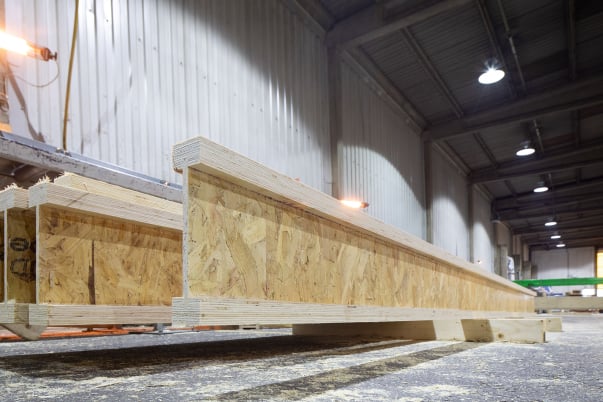
Before diving into their benefits, it’s important to understand what I-Joists are. An I-Joist is an engineered wood product shaped like the letter "I," consisting of top and bottom flanges made of laminated veneer lumber (LVL) or solid wood, and a thin web of oriented strand board (OSB) in between. This design optimizes strength while using less material compared to traditional dimensional lumber.
Unlike conventional floor joists, which can warp, shrink, or twist over time, I-Joists are manufactured to be straight and uniform. This consistency is a major reason why they are so effective at minimizing common floor and structural problems.
How I-Joists Reduce Squeaky Floors
Squeaky floors are typically caused by movement. When floorboards rub against nails, joists, or each other, friction creates that annoying squeaking noise. Several factors can contribute to this, including:
Shrinkage and drying of wood
Joist deflection (bending under load)
Gaps forming between flooring and joists
I-Joists significantly reduce these issues because they are engineered to resist shrinkage and warping. Here’s how they help eliminate squeaky floors:
1. Dimensional Stability
Traditional lumber tends to expand and contract with changes in humidity, leading to movement that causes squeaks. I-Joists, however, are designed to maintain their shape and size, regardless of moisture levels. Their flanges are made from engineered wood, and their webs are manufactured from OSB, both of which are far less susceptible to the natural movement that plagues solid wood.
2. Stronger and Stiffer Floors
Because I-Joists are incredibly stiff and strong, they reduce floor deflection. Less deflection means fewer opportunities for nails and fasteners to loosen over time, which in turn prevents the friction that causes squeaking. Floors built with I-Joists feel more solid underfoot, creating a quieter, more comfortable living space.
3. Better Fastening
The uniformity of I-Joists ensures a tighter fit for nails and screws. Since the surfaces remain even and stable, fasteners stay firmly in place. This greatly reduces the potential for movement between flooring materials and structural supports, a common culprit behind squeaks.
Preventing Structural Shifts with I-Joists
Beyond just squeaky floors, structural shifts are a more serious concern. Over time, buildings can settle unevenly, leading to cracks in walls, uneven floors, and other serious issues. Fortunately, I-Joists are a key player in maintaining long-term structural integrity.
Here’s how:
1. Load Distribution
I-Joists are engineered to carry heavier loads over longer spans without the need for additional support beams or columns. By distributing weight more evenly across the structure, they minimize stress points that can lead to shifting or settling over time. This is especially important for open-concept homes where wide, unobstructed spaces are desired.
2. Resistance to Creep
Creep refers to the slow, permanent deformation of a material under constant stress. In traditional lumber, creep can lead to sagging floors and uneven surfaces. I-Joists resist creep much better than solid sawn lumber due to their engineered design and materials, helping structures remain level and stable for decades.
3. Uniform Performance
Because I-Joists are manufactured to consistent standards, every joist behaves predictably under load. This uniformity reduces the chance of uneven settling, which can occur if some joists bear more load than others. As a result, homes framed with I-Joists are less prone to the unevenness and structural issues that can emerge over time.
Additional Benefits of I-Joists
Beyond reducing squeaks and preventing structural shifts, I-Joists offer several other advantages:
Sustainability: They make better use of smaller, fast-growing trees compared to traditional lumber.
Lightweight: Easier to handle and install, which can reduce labor costs.
Customization: Pre-cut openings for HVAC, plumbing, and wiring make installation faster and more efficient.
These advantages make I-Joists a smart choice not just for new construction, but also for major renovations where stability and longevity are a priority.
When it comes to building a home that stands the test of time, attention to detail matters. Squeaky floors and structural shifts might seem like minor annoyances at first, but they can evolve into major headaches if not addressed properly. Using high-quality building materials like I-Joists is one of the best ways to ensure a durable, quiet, and comfortable home.
Their engineered design, superior strength, and resistance to common issues like shrinkage and warping make I-Joists a standout option for modern builders and homeowners alike. Whether you're designing a new dream home or upgrading an existing one, considering I-Joists could be the key to a more stable and serene living environment.